Common Whey Protein Mistakes to Avoid (And How to Fix Them)
Whey protein is about as simple as supplements get — scoop, mix, drink. That simplicity is exactly why small mistakes slip through unnoticed: people either overdo it, use it inconsistently, or blame the protein itself for problems that actually come down to how it’s being used.
Quick answer: The most common whey protein mistakes are taking too much in one serving, relying on protein alone without enough total daily protein from food, inconsistent daily use, poor mixing technique, and assuming any digestive discomfort means whey “doesn’t agree with you” rather than checking if a digestion-friendly formula would solve it. Fixing these is mostly about routine, not the product itself.
Mistake 1: Assuming More Protein Per Serving Is Always Better
Piling in two or three scoops at once doesn’t mean your body uses it all at once — protein synthesis has practical limits per sitting, and the excess doesn’t provide proportional extra benefit. A single, appropriately sized serving used consistently across the day tends to serve muscle recovery goals better than one oversized shake.
Mistake 2: Treating Whey Protein as Your Entire Protein Strategy
Whey protein is a supplement to your diet, not a replacement for it. Relying on shakes alone while neglecting protein from meals — dal, paneer, eggs, chicken, fish, depending on your diet — often means falling short of total daily protein needs rather than exceeding them, since one or two scoops a day typically covers only part of what active individuals need.
Mistake 3: Inconsistent Daily Use
Protein intake works cumulatively — what matters is your average daily intake over weeks, not a single well-timed shake after one good workout. Skipping days, forgetting servings, or only using it on “gym days” undercuts the entire point of supplementing in the first place.
Mistake 4: Mixing It Poorly
Dumping powder into water without proper mixing (or without a shaker) often leaves clumps that are unpleasant to drink and make it harder to gauge if you’ve actually consumed the full serving. A proper shaker bottle, or blending with a spoon against the side of a glass, avoids this entirely.
Mistake 5: Ignoring Digestive Discomfort — Or Blaming Whey Entirely
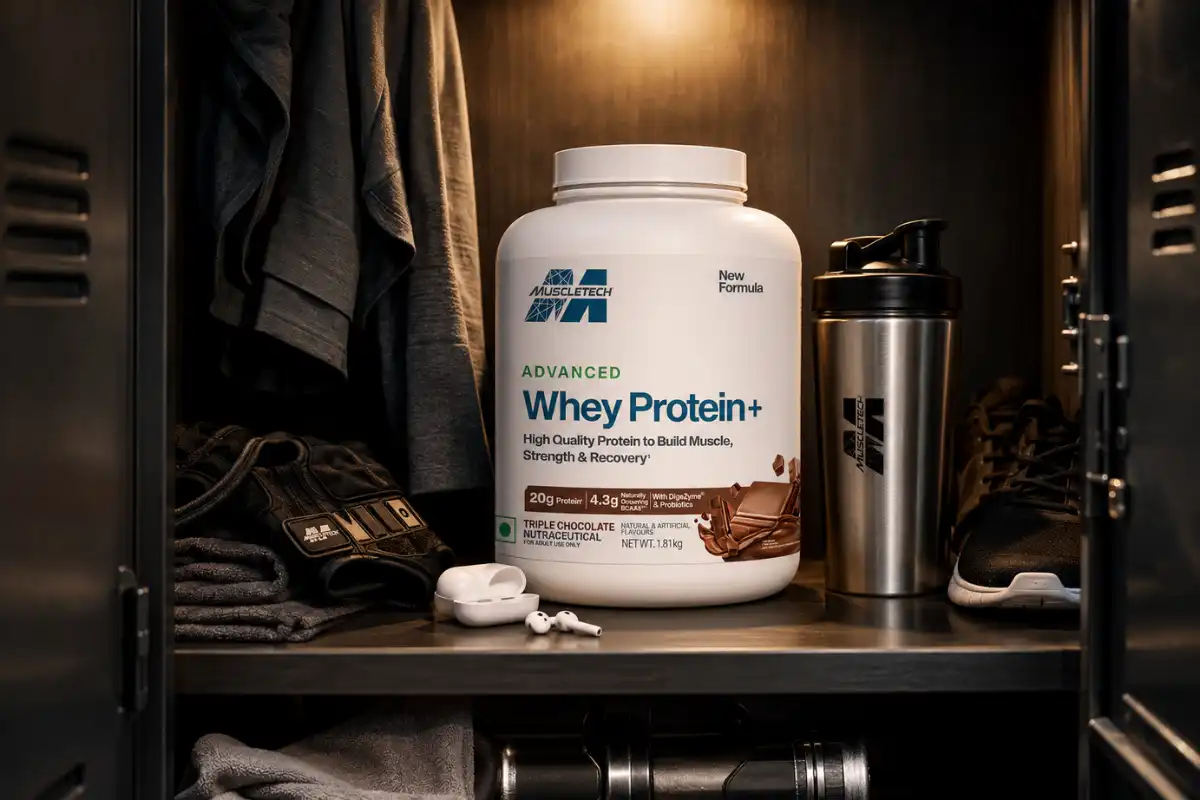
This is one of the most common and most avoidable mistakes. Some people experience bloating or heaviness with standard whey and conclude that “whey protein doesn’t agree with them,” giving up on supplementation entirely. In many cases, the issue is lactose sensitivity or simply how quickly a standard formula digests — not an inherent problem with whey protein as a category. Formulas built with digestive support in mind, like MuscleTech™ Advanced Whey Protein+ (which includes DigeZyme® digestive enzymes and probiotics alongside its whey and yeast protein blend), are specifically designed to address this rather than requiring you to abandon protein supplementation altogether.
Mistake 6: Taking It at Random, Inconsistent Times
There’s no single mandatory time to take whey protein, but taking it at a completely random point each day makes it easier to forget entirely. Anchoring it to a consistent daily habit — post-workout, with breakfast, or alongside a specific meal — tends to matter more for actually staying consistent than chasing an “optimal” window.
Mistake 7: Not Checking What Else Is in the Formula
Not all whey products are built the same way, and treating them as interchangeable can mean missing out on formulas better suited to your needs — whether that’s added digestive support, a specific protein source, or a formula designed for lactose sensitivity. Reading the ingredient list, not just the protein-per-scoop number, is worth the extra minute.
Mistakes at a Glance
| Mistake | Better Approach |
| Oversized single servings | One appropriately sized serving, used consistently |
| Relying on shakes alone | Combine with dietary protein sources across meals |
| Inconsistent daily use | Track average intake over weeks, not single days |
| Poor mixing technique | Use a proper shaker bottle for a smooth mix |
| Blaming whey for all bloating | Check if a digestion-friendly formula solves it |
| Random timing | Anchor to a consistent daily habit |
| Ignoring the full ingredient list | Choose a formula that matches your actual needs |
About MuscleTech™ Advanced Whey Protein+
Advanced Whey Protein+ combines whey protein concentrate with fermented yeast protein, DigeZyme® digestive enzymes, and probiotics — built specifically to address the digestion-related mistake that trips up so many first-time and returning protein users. It’s designed for consistent, comfortable daily use rather than just maximum protein-per-scoop numbers. For the full ingredient breakdown, see [Advanced Whey Protein+ vs Regular Whey Protein: What’s the Difference?].
Frequently Asked Questions (FAQs)
What’s the most common mistake people make with whey protein?
Inconsistent daily use is one of the biggest — protein intake works cumulatively, so skipping days or only using it occasionally undercuts the benefit more than most people realize.
Is it a mistake to take more than one scoop of whey protein at a time?
Generally, yes. The body doesn’t use excess protein from an oversized single serving proportionally better — a properly sized serving used consistently tends to be more effective than occasional oversized ones.
Does whey protein always cause bloating?
No. Bloating is often related to lactose sensitivity or how quickly a specific formula digests, not an inherent issue with whey protein as a category. Formulas with added digestive enzymes and probiotics are designed to address this directly.
Can I rely on whey protein shakes instead of protein from food?
No, it’s best used as a supplement to dietary protein, not a replacement for it. Whole food sources remain an important part of meeting total daily protein needs.
Does the time of day I take whey protein matter?
Less than consistency does. Anchoring your serving to a regular daily habit matters more than chasing one “optimal” timing window.
How do I avoid clumpy whey protein shakes?
Use a proper shaker bottle, or mix thoroughly with a spoon against the side of a glass, rather than just stirring loosely in water.