Benefits of Creatine Supplementation: What It Does Beyond Muscle Growth
Creatine is usually introduced as a strength-and-muscle supplement, and that reputation is well earned. But that’s only part of the picture. Creatine supplementation also plays a role in how your muscles hydrate at the cellular level, how quickly you bounce back between training sessions, and how you perform during repeated, high-intensity efforts — benefits that matter even if “bigger muscles” isn’t your main goal.
Quick answer: Creatine supplementation supports more than muscle growth — it aids cellular hydration, recovery between workouts, performance in repeated high-intensity efforts, and may support mental focus under fatigue. The benefit tends to be more noticeable for vegetarians, since dietary creatine comes mainly from meat and fish and vegetarians typically start with lower muscle creatine stores. MuscleTech™ Platinum Creatine delivers 3g of HPLC-tested micronized creatine monohydrate per scoop and is itself a certified vegetarian product.
What Creatine Actually Does in the Body
Creatine helps regenerate adenosine triphosphate (ATP) — the body’s primary energy currency for short, intense bursts of effort. More readily available ATP means your muscles can keep producing force for longer before fatigue sets in. For the full breakdown of how this mechanism works, see [What Is Creatine Monohydrate & How Platinum Creatine Works]
The Benefit Most People Already Know: Strength & Power
Creatine’s role in supporting strength, power output, and lean muscle development is the most studied and most talked-about benefit, and it’s a major reason serious lifters use it. (We’ve covered this in detail in [Benefits of Creatine for Strength, Endurance & Muscle Growth] — this article focuses on what creatine does beyond that.)
Why Creatine Supplementation Matters More If You’re Vegetarian
Most dietary creatine comes from meat and fish. Since a large share of the Indian population follows a vegetarian diet, many people start with lower baseline muscle creatine stores than non-vegetarians simply due to diet, not training status. Research on vegetarians and creatine supplementation generally points to a more pronounced increase in muscle creatine content and performance response, compared to people who already get meaningful creatine from food.
This is one reason creatine supplementation is particularly relevant for vegetarian gym-goers and athletes in India — and it’s part of why MuscleTech™ Platinum Creatine is formulated as a certified vegetarian product, so vegetarian users aren’t relying on diet alone to close that gap.
Cellular Hydration & Cell Volumization
Creatine draws water into muscle cells, a process known as cell volumization. This is part of why some people notice a slight increase in scale weight when starting creatine — it’s intracellular water, not fat gain. This added cellular hydration is also thought to support the muscle’s working environment during training, which is one reason creatine is grouped with hydration-related performance aids rather than purely “bulking” supplements.
Faster Recovery Between Training Sessions
Recovery is where creatine’s benefits often get overlooked. Some research suggests creatine supplementation may help reduce markers of muscle damage and exercise-induced stress after intense training, which could translate into feeling more ready for your next session rather than constantly training through residual fatigue. This matters as much for someone training 4–5 days a week as it does for a competitive athlete.
Performance in High-Intensity, Repeated Efforts
Creatine’s performance benefit is most consistent in activities involving short, repeated bursts of maximal effort — think sprint intervals, HIIT circuits, combat sports rounds, or sets performed back-to-back with limited rest. Because phosphocreatine resynthesis (the process creatine supports) happens relatively quickly, supplementation can help maintain output across multiple efforts rather than just the first one.
Cognitive Function & Mental Fatigue
This is an emerging but genuinely interesting area of creatine research: because creatine also supports energy metabolism in brain tissue, some studies have looked at its effect on mental fatigue and cognitive performance, particularly under conditions like sleep deprivation or high stress — and particularly in people with lower baseline creatine stores, such as vegetarians. The evidence here is still developing compared to the strength and performance research, so it’s worth treating as a “may support” benefit rather than a guaranteed effect — but it’s a meaningful part of why creatine’s reputation is expanding beyond the gym.
Benefits at a Glance
| Benefit | Why It Happens | Most Relevant For |
| Strength & power output | More available ATP for short, intense efforts | Lifters, strength athletes |
| Cellular hydration | Creatine draws water into muscle cells | All users |
| Recovery between sessions | May reduce markers of exercise-induced muscle stress | Frequent trainers |
| Repeated high-intensity performance | Faster phosphocreatine resynthesis | HIIT, sprint, combat sports |
| Mental focus under fatigue | Supports brain energy metabolism (emerging research) | Sleep-deprived, high-stress users |
| Larger relative response | Lower baseline dietary creatine intake | Vegetarians |
Who Benefits Most From Creatine Supplementation?
- Vegetarians and anyone with low dietary creatine intake
- People training in repeated high-intensity formats (HIIT, sprints, combat sports, team sports)
- Frequent trainers who need to recover well between sessions
- Strength and power athletes
- Anyone training under high stress, poor sleep, or demanding schedules
About MuscleTech™ Platinum Creatine
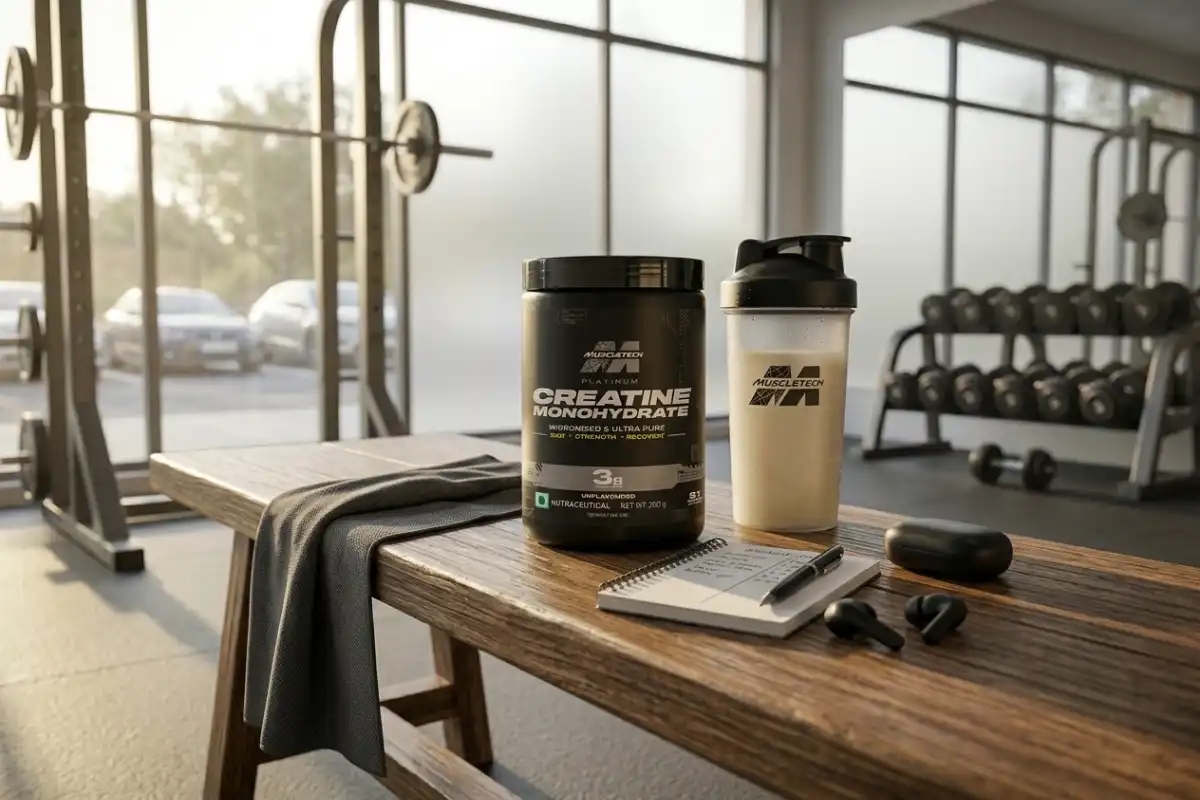
MuscleTech™ Platinum Creatine provides 3g of micronized creatine monohydrate per scoop — an unflavoured, vegetarian formula that’s HPLC-tested and verified for purity, so it mixes easily into water or any other MuscleTech™ product without altering taste. It’s designed for simple daily use: an optional 3-day loading phase (one scoop, four times daily) followed by a maintenance phase of one to two scoops daily, each mixed with 250ml of water.
Frequently Asked Questions (FAQs)
What are the main benefits of creatine supplementation?
Creatine supports strength and power, cellular hydration, faster recovery between sessions, performance in repeated high-intensity efforts, and — based on emerging research — mental focus under fatigue.
Does creatine only help with muscle building?
No. While strength and muscle support are the best-known benefits, creatine also plays a role in cellular hydration, recovery, and repeated high-intensity performance — benefits that matter even outside a muscle-building goal.
Is creatine more beneficial for vegetarians?
Generally, yes. Since dietary creatine comes mainly from meat and fish, vegetarians typically start with lower muscle creatine stores and tend to show a more noticeable response to supplementation.
How much creatine should I take daily?
MuscleTech™ Platinum Creatine provides 3g of creatine per scoop. You can follow an optional loading phase (one scoop, four times daily, for the first 3 days) followed by a maintenance dose of one to two scoops daily, mixed with 250ml of water.
Does creatine cause water retention?
Creatine draws water into muscle cells as part of how it works — this is intracellular hydration, not the kind of water retention associated with bloating. For a full myths-vs-facts breakdown, see [Is Creatine Safe? Myths & Facts for Indian Fitness Users].
Can beginners take creatine?
Yes. Creatine is one of the most studied sports supplements and is suitable for beginners as well as experienced lifters, used as directed.
Is MuscleTech™ Platinum Creatine suitable for vegetarians?
Yes. It’s a certified vegetarian, unflavoured product, HPLC-tested and verified for purity.