Best Pre-Workout Ingredients for Energy, Focus & Performance
Creatine is one of the most researched supplements in sports nutrition, yet it’s also one of the most misunderstood. A lot of that confusion isn’t about safety — it’s about how creatine actually works day to day: whether you need a loading phase, whether you have to cycle off it, whether it “stops working” for some people, and whether a fancier-looking product performs any better than a plain one.
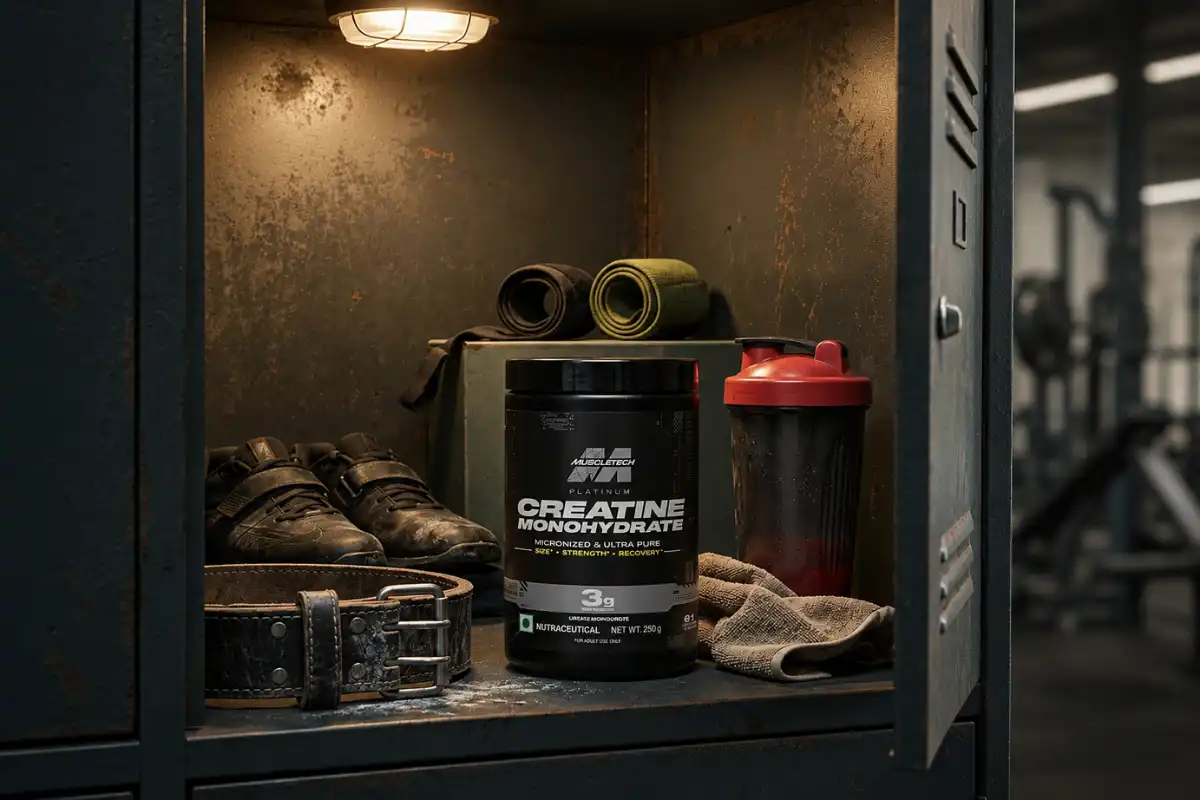
Quick answer: Most common creatine myths are about usage, not safety — and most of them don’t hold up. You don’t need to load or cycle off creatine, timing matters far less than consistency, flavour and price don’t determine effectiveness (purity and dose do), and true “non-responders” are rare when creatine is used correctly. MuscleTech™ Platinum Creatine provides 3g of HPLC-tested micronized creatine monohydrate per scoop, built around exactly this kind of straightforward, evidence-based daily use.
Looking for safety-specific myths — kidney health, banned-substance status, and similar concerns? That’s covered separately in [Is Creatine Safe? Myths & Facts for Indian Fitness Users].
Myth vs Fact at a Glance
| Myth | Fact |
| You must do a loading phase for creatine to work | Loading speeds up saturation, but a daily maintenance dose reaches the same muscle saturation over a few weeks |
| You need to cycle off creatine every few months | There’s no physiological requirement to cycle off; consistent daily use at the recommended dose is standard practice |
| Creatine builds muscle on its own | Creatine supports training output and recovery; the muscle growth itself still comes from training and nutrition |
| Pricier or flavoured creatine works better | Effectiveness comes down to purity and form (e.g. tested, micronized creatine monohydrate), not flavour or price |
| Creatine doesn’t work for everyone | True non-response is rare; differences in baseline muscle creatine stores (e.g. in vegetarians) affect how noticeable the change feels |
| You must take it right after your workout | Timing matters far less than daily consistency in keeping muscle creatine stores saturated |
| Creatine is only for bodybuilders | It’s relevant for beginners, general fitness users, and anyone doing repeated high-intensity efforts, not just bodybuilders |
| Vegetarians don’t need to supplement since the body makes its own creatine | The body does synthesize some creatine, but typically not enough to fully saturate muscle stores without adequate dietary or supplemental intake |
Myth: You Must Load Creatine for It to Work
Fact: A loading phase (around four smaller doses a day for the first few days) gets your muscles saturated with creatine faster. But it’s a shortcut, not a requirement — taking a steady daily maintenance dose gets you to the same saturation point, it just takes a few weeks instead of a few days. For the full loading-vs-daily comparison, see [Creatine Loading vs Daily Use: What’s Best for Indian Athletes?].
Myth: You Need to Cycle Off Creatine
Fact: Unlike some supplements, creatine doesn’t come with a built-in need to “cycle off” periodically. As long as you’re sticking to the recommended daily dose, continuous use is standard and well-studied — there’s no physiological reset required.
Myth: Creatine Doesn’t Work for Everyone
Fact: This myth usually comes from people not noticing a dramatic change. In reality, how noticeable creatine’s effect feels often comes down to your starting point — someone with already-high dietary creatine intake (regular meat and fish eaters, for example) may notice a smaller relative shift than someone starting from a lower baseline, such as a vegetarian. That’s a difference in starting point, not a case of creatine “not working.” We go deeper on this in [Benefits of Creatine Supplementation: What It Does Beyond Muscle Growth].
Myth: Pricier or Flavoured Creatine Is More Effective
Fact: Creatine monohydrate is creatine monohydrate — what actually matters is purity and verified quality, not flavouring or shelf price. MuscleTech™ Platinum Creatine is unflavoured and HPLC-tested and verified, which is the kind of purity check that matters far more for effectiveness than whether a product is flavoured or premium-priced.
Myth: Timing Is Everything
Fact: While post-workout timing gets a lot of attention, the bigger driver of creatine’s effect is keeping your muscle stores consistently saturated — which comes from taking it daily, not from hitting an exact post-training window. If you’re stacking it with whey protein, see [How to Use Creatine with Whey Protein for Best Results] for practical timing guidance.
Frequently Asked Questions (FAQs)
Do I need to do a loading phase with creatine?
No. A loading phase saturates your muscles faster, but a steady daily dose reaches the same saturation point over a few weeks.
Is it true that creatine stops working after a while?
No. There’s no evidence that creatine “stops working” with continued use. Cycling off isn’t physiologically necessary as long as the recommended dose is followed.
Does creatine work for everyone?
Yes, in the sense that it consistently supports muscle creatine saturation. How noticeable the effect feels can vary based on your starting dietary intake — true non-response is uncommon.
Is unflavoured creatine less effective than flavoured options?
No. Effectiveness comes from the purity and dose of creatine monohydrate itself, not the flavour. MuscleTech™ Platinum Creatine is unflavoured and HPLC-tested for purity.
Do I have to take creatine right after my workout for it to work?
No. Daily consistency matters more than a specific timing window — what matters most is keeping your muscle creatine stores saturated day to day.
Is creatine only useful for bodybuilders?
No. It’s relevant for beginners, general fitness users, and anyone training with repeated high-intensity efforts, not just bodybuilders or advanced lifters.